 Aderson
“Why does Princess Leia keep her hair tied up in buns?
- So it doesn’t Hang Solow”
🤣 source: Men’s Health
Today I bring to you a debate, a metric, and an algorithm.
▶️ You may have picked up already your first language. Maybe your college picked a language for you. Maybe you saw an interesting tutorial.
In the quest for the perfect programming language for beginners, opinions are divided. Some tout the simplicity of Python, while others advocate for the deeper understanding offered by C/C++.
Join the debate to uncover which language reigns supreme for novice coders.
📊 I brought this topic because I think we can benefit from understanding some of the important web metrics used by Google when assessing how good is a site and as a consequence, whether they should display on the search results or not.
Time to First Byte (TTFB) refers to the amount of time it takes for a user’s browser to receive the first byte of data from a web server after making an HTTP request. It encompasses the time spent on the network (latency) as well as the time the server takes to process the request and generate a response.
TTFB is a crucial metric in web performance optimization, as it directly impacts the perceived speed of a website or web application. A shorter TTFB typically indicates better server responsiveness and faster loading times for users.
🪺 In the last few days I heard a lot of my colleagues at work talking about “round robin” this, “round robin” that. I knew “round robin” was a scheduling algorithm, but I didn’t recall the details.
So I went looking and found this great video explainer.
The round-robin algorithm is a scheduling technique used in multitasking environments. It assigns time slices to each process in a circular order, ensuring fair access to the CPU. Each process gets a small unit of CPU time, then the scheduler moves to the next process in the queue.
This continues until all processes have received their allotted time slice, at which point the scheduler cycles back to the beginning of the queue. It’s a simple and efficient way to share CPU resources among multiple processes.
Personal Updates:
-
🎥 I will be watching, with my younger daughter, today in a movie theater close by, “Star Wars Episode I: The Phantom Menace - 25th Anniversary”
-
🎤️ I have started a series of career-oriented video tips: “Boost Your Tech Career with These Meetup Tips“ - Do you have questions about career? Let me know - Just hit reply to this email.
-
🛫 Booked a trip to Brazil for July for me and my daughters. I cannot get enough of my home country.
-
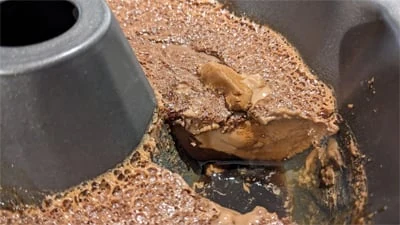
🍰 Desert update: My chocolate pudding was delicious, according to my girls, but not perfect. Aa bit soft inside - just like me.
“Do or do not. There is no try.” — Yoda
May the fourth be with you!
Aderson Oliveira